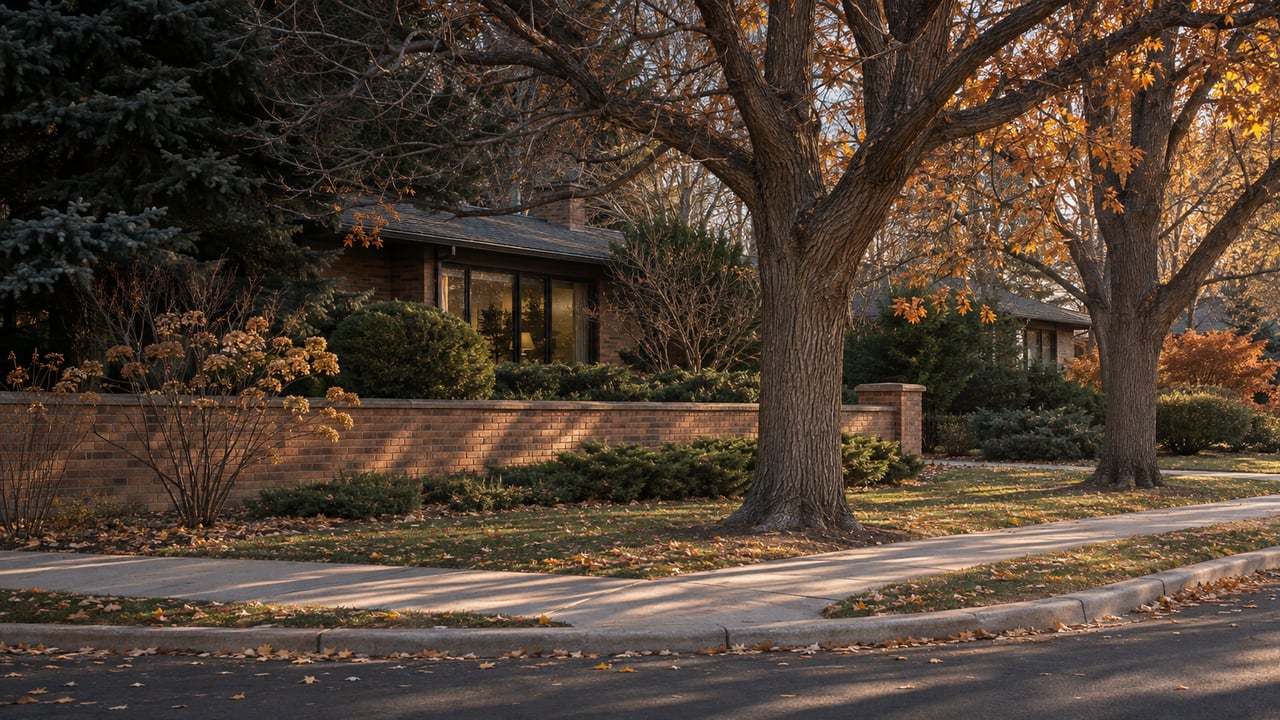
At the northwest corner of South Colorado Boulevard and East Tennessee Avenue, a mid-century church sits back from the boulevard on a lot of about an acre. It has stood there since 1953. The lot runs west to South Harrison Street, a residential street parallel to Colorado Boulevard, and the Denver Post describes it as the only commercial property in the immediate area that reaches Harrison.
The site now has a proposed new use. A Quick Quack Car Wash has been proposed at 999 S. Colorado Blvd., where the church building stands. The building's future was largely settled earlier in 2026, when Denver granted a certificate that allows demolition. What remains open is how an express car wash would send traffic onto Tennessee and Harrison. That layout is what the city's development review is examining now.
How the church corner reached this point
The church has a longer local history than its address suggests. Developing MyCity reports that the property is tied to Lovingway United Pentecostal Church, a congregation with Denver roots going back to the 1970s. Lovingway once met in the former Temple Emanuel synagogue at 1595 Pearl Street and left that building after it was sold in 1981. On Colorado Boulevard, the congregation has used names including Lovingway Innercity UPC and Denver's House of Worship. The building covers about 15,368 square feet.
The preservation question came first. The property entered Denver's demolition eligibility review because of its mid-century architecture and its long religious use. Denver's Landmark Preservation Commission extended the time limit on the proposed demolition-eligibility certificate at its January 6, 2026 meeting, pushing it to March 3. At its March 3 meeting, the Commission extended it again to March 27.
According to the Denver Post, neighbors had considered seeking landmark status, which would effectively have prevented demolition. At the time, a different buyer was under contract for the site. After months of mediation, the neighbors concluded that a landmark designation was unlikely to win support from city leaders, and the certificate was granted once their opposition ended. As Developing MyCity points out, the certificate allows demolition but does not approve any replacement building.
That order of events explains where the discussion stands. The preservation step, which could have kept the building, is finished. The step now underway concerns what replaces it.
What the plan puts on the site
The concept documents call for an automatic express tunnel wash with self-service vacuums on about 1.07 acres. They use Quick Quack's QQ-108 building model, with the wash tunnel near the center of the property.
| Element | What the concept plan shows |
|---|---|
| Building | 3,588-square-foot wash tunnel, QQ-108 model |
| Vacuums | 22 standard stalls plus 1 accessible stall, 23 in all |
| Parking | 26 spaces, including employee parking |
| Queuing | Three rows of cars leading to the wash entrance |
| Vacuum placement | Along Tennessee Avenue |
| Access | Entry and exit on Tennessee, plus a second exit onto Harrison |
| Design | Masonry and painted panels in Quick Quack's green and yellow, by ID Studio 4 |
Lone Star Builders Inc. is listed as the applicant, according to WhatNow. The Denver Post reports that Quick Quack is based in California and has a dozen Colorado locations, one in Parker and the rest in the Colorado Springs area, along with locations in eight other western states.
The plan also has a company history. A preliminary site plan dated May 4, 2026 passed Quick Quack's internal design review on May 8. Developing MyCity notes that this was the company's own approval and not a decision by the City and County of Denver.
Why Harrison and Tennessee are the pressure points
This lot runs all the way to Harrison, and the proposed layout uses that depth. Cars line up in three rows, vacuums sit along Tennessee, and a second exit opens onto Harrison. A business that operates on Colorado Boulevard would have one of its exits on a residential street.
The neighbors' objections are focused on that layout. Nearby residents who spoke with the Denver Post raised concerns about traffic leaving the site onto Harrison, the overall scale of the wash and noise from the 23 vacuums. A letter the neighbors drafted to send to the city states their position:
"The fact that Colorado Boulevard can accommodate commercial traffic does not mean Harrison and Tennessee can safely accommodate the traffic generated by this business."
According to the Denver Post, the neighbors are not opposed to developing the property. Their position is that the new use should better fit what the neighborhood wants. Quick Quack and the congregation did not respond to the Denver Post's requests for comment.
Their letter centers on traffic moving onto Tennessee and Harrison, which the site plan determines.
Where the plan sits in Denver's review
Denver's ePermit system lists the project as 2026-CONCEPT-0000164, a concept plan with the status "Resubmittal Required." WhatNow links it to project master record 2026-PROJMSTR-0000315. The city record classifies the use as "Automobile Services, Light," with one new structure in a "Drive Through Services" building form. The application does not request a rezoning. Hoodline reported on October 26 that the concept plan was still awaiting resubmittal and that the church building was still standing.
The rezoning point matters for what comes next. With no rezoning requested, the project goes through Denver's site development plan process. According to the city's Site Development Plan page, new commercial construction requires a site development plan, and the process has three parts:
- Concept. The applicant submits a development concept. Denver's concept plan page describes this as an early, coordinated round of city feedback. The 999 S. Colorado Blvd. file is at this stage.
- Formal site development plan. Once the concept clears, the applicant submits a formal plan, and the relevant city agencies review it and send comments.
- Approval and recording. After the comments are resolved and fees are paid, the zoning permit is issued, and the final signed plan is submitted and recorded by city staff.
Throughout the process, a Community Planning and Development project coordinator collects technical materials, coordinates reviews by other agencies and decides when the project can apply for building permits, usually during the formal plan phase.
The details neighbors are raising, including the Harrison exit, the vacuums along Tennessee and the three queuing rows, are all part of the site plan, and the site plan is what this review covers. "Resubmittal Required" means the applicant has to send the city a revised concept before the project moves on. No construction start or opening date has been set.
Following the file from the neighborhood
Every update will appear in the ePermit record. Searching for 2026-CONCEPT-0000164 or the 999 S. Colorado Blvd. address shows the current status, and a status change will be the first public sign that a revised concept has been filed or that the project has moved to a formal site development plan.
Neighborhood organizations are another way to follow the project. Denver's Registered Neighborhood Organizations page explains that RNOs receive city notices for specified activities, and that project-specific notices generally go to RNOs whose boundaries are within 200 feet of a project. The city's District 6 RNO list includes Belcaro Park Homeowners Association.
This post is general information about a public development review and is not legal advice. Anyone weighing how a city decision affects their own property should talk with an appropriate professional.
The church lot is the only commercial property in the immediate area that reaches Harrison, so its plan matters to the homes on that street. If you own near Tennessee and Harrison and want to talk through what a change at 999 S. Colorado Blvd. could mean for your block, Downing Street Group is glad to look at it with you. Request a private consultation.
